
Securely share
Last updated on 2026-04-14 | Edit this page
Overview
Questions
- What are data access protocols?
- Is open access a data access protocol?
- Can data be exposed as a service through FAIR API protocols?
Objectives
- Learn what data access protocols are.
- Distinguish between human-facing and machine-facing access instructions.
- Explore how FAIR API protocols can expose data as a service.
FAIR principles used in data access protocols
Accessible:
- FM-A1.1 Access Protocol: https://doi.org/10.25504/FAIRsharing.yDJci5
- FM-A1.2 Access Authorization: https://doi.org/10.25504/FAIRsharing.EwnE1n
Interoperable:
- FM-I3 Use Qualified References: https://doi.org/10.25504/FAIRsharing.B2sbNh
What are data access protocols?
Data access protocols are the explicit rules and steps that tell humans or machines how to access a data source.

Just as you need the correct key, code, or procedure to enter a secure room, data access often depends on following the correct process.
| Access protocol | Example | Note |
|---|---|---|
| Communication between machines | HTTP request or API call | A machine requests information using a standard network protocol |
| Communication between humans | Data request form or email workflow | A person follows explicit instructions to request access |
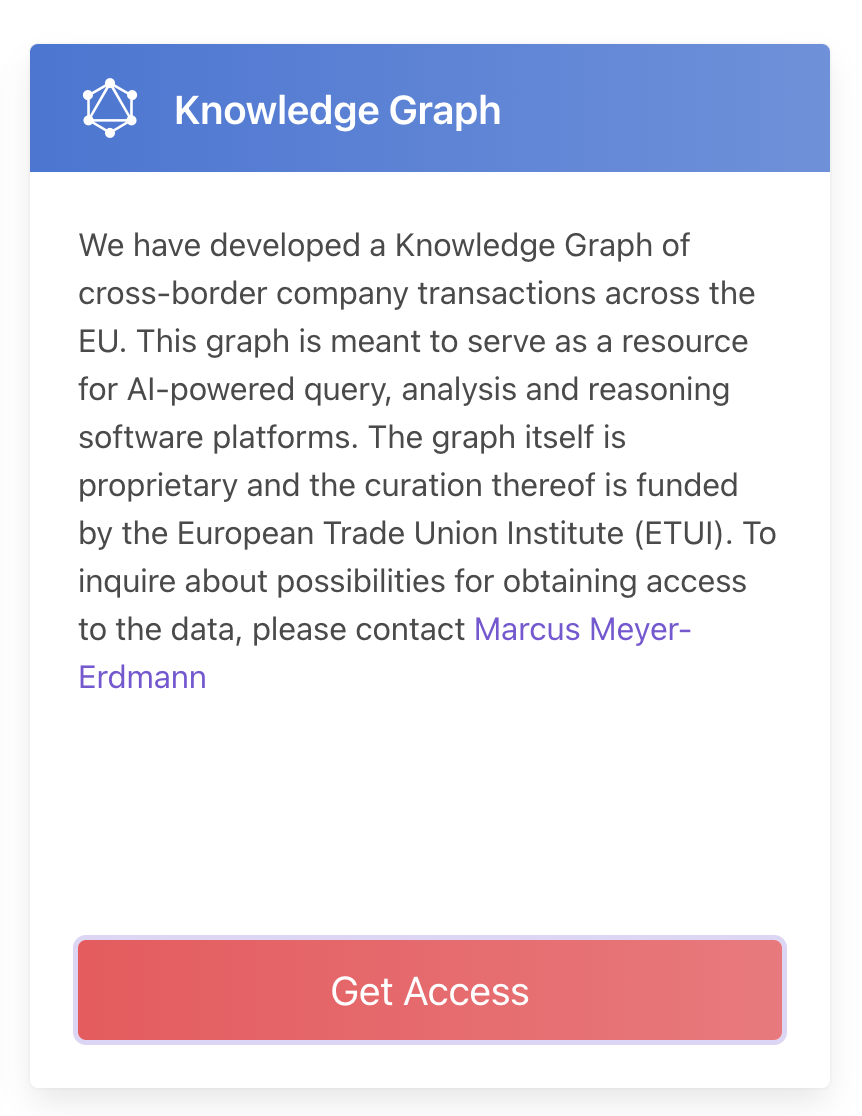
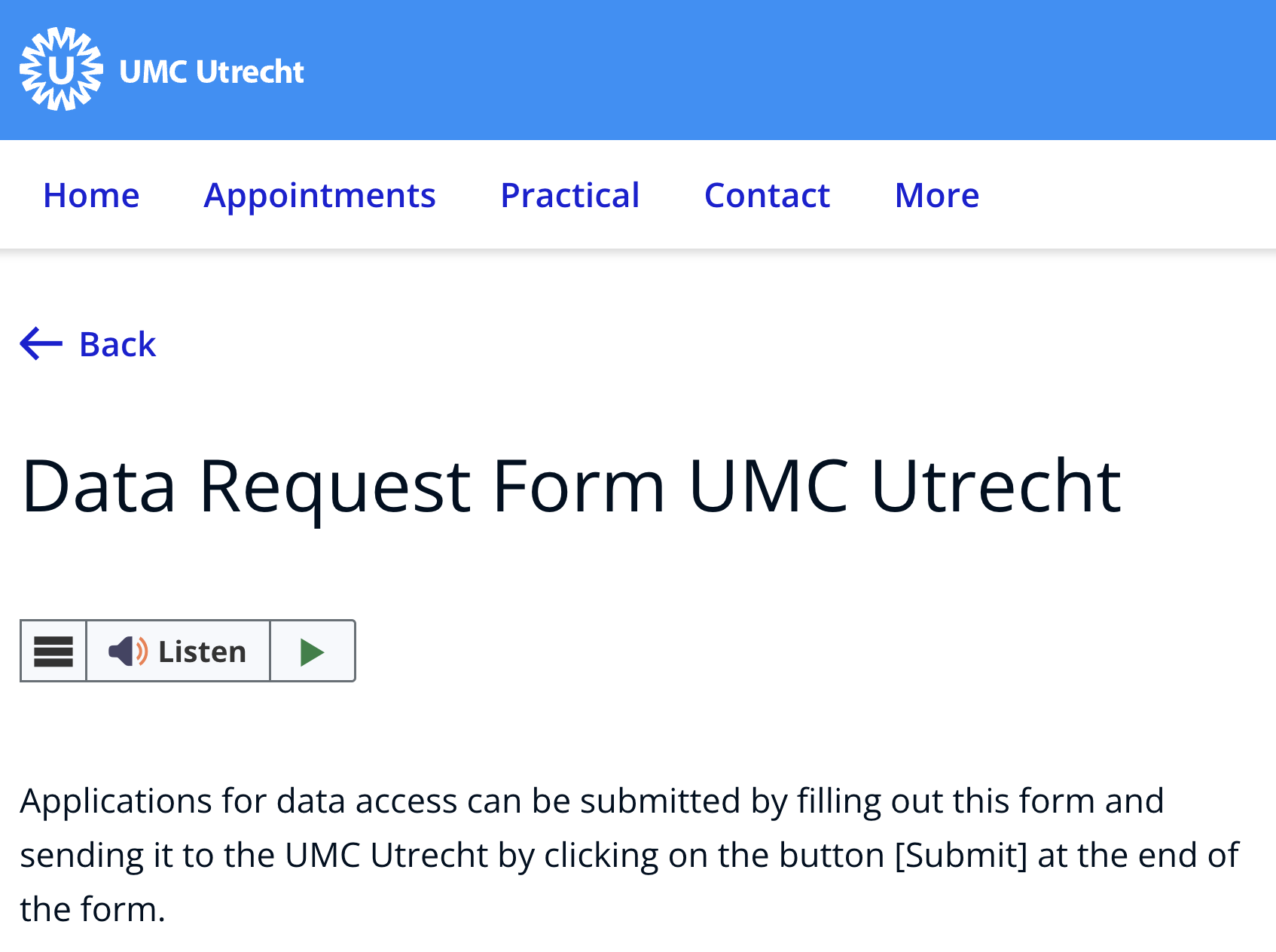
Is open access a data access protocol?
Strictly speaking, open access is a policy framework rather than a network protocol, but in practice it functions as an access model with explicit rules: the data can be retrieved openly without individual authorization.
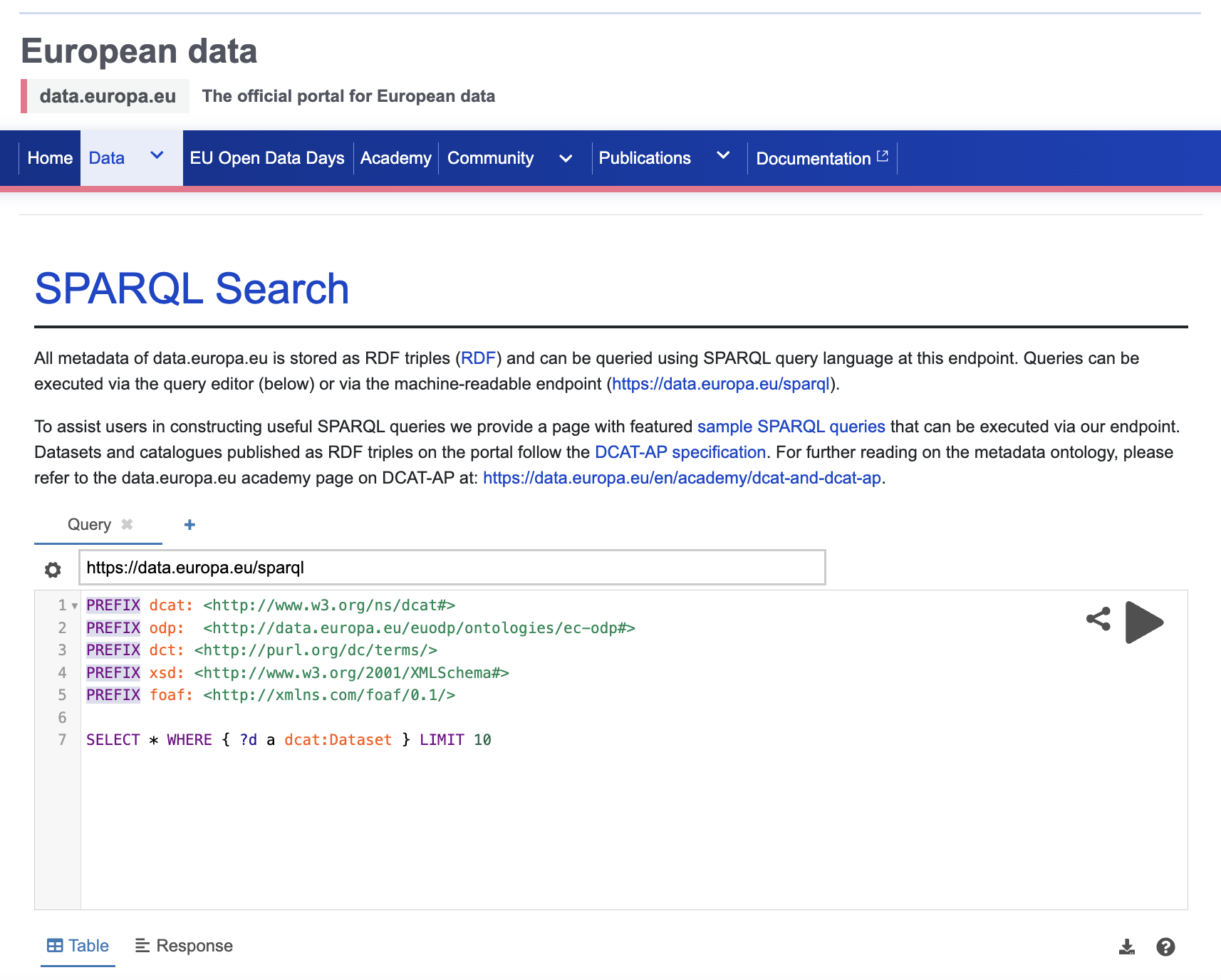
Depositing data in a public repository often gives the resource an open-access access route automatically. Some open datasets also expose machine-readable access through APIs or SPARQL endpoints.
Example:
- EU public data SPARQL interface: https://data.europa.eu/data/sparql
- Endpoint: https://data.europa.eu/sparql
Exercise
Visit the Zenodo COVID-19 community:
https://zenodo.org/communities/covid-19/
What is the default data access protocol visible for the displayed records?
The records are presented as open access resources, which is visible through the repository interface and download behavior.
Open access can be human-friendly and machine-friendly
Humans see direct download options. Machines see stable web requests and, in some systems, structured service endpoints.
Can data be exposed as a service through FAIR API protocols?
Yes, but it requires technical infrastructure and some familiarity with linked data or knowledge graph tooling.
Useful tools include:
| Tool | Source | GUI | Note |
|---|---|---|---|
| TriplyDB | https://triplydb.com/ | Yes | Quick hosted option for exposing data |
| GraphDB | https://www.ontotext.com/products/graphdb/ | Yes | Requires a server or managed deployment |
| FAIR Data Point | https://github.com/fair-data/fairdatapoint | No | Powerful but technical |
| rdflib-endpoint | https://pypi.org/project/rdflib-endpoint/ | No | Fast local route for experimentation |
Register FAIR APIs where others can find them
If you expose a FAIR API or similar service endpoint, register it in an appropriate service registry such as SMART API:
Exercise
Expose RDF data through a service endpoint:
- Reuse the RDF data generated from the data descriptions episode, or bring another RDF file.
- Install
rdflib-endpoint. - Run a local service and confirm that the data can be queried.
This is intentionally optional. The goal is to understand what it takes to move from static downloadable data to a service-oriented access model.
Scenario
You have sensitive financial information that cannot be openly disclosed, but you still want to enable legitimate research access.
What kind of human and machine access protocols would you design? What should be openly visible, and what should only be available behind review or controlled authorization?
- Data access protocols describe how humans and machines gain access to data.
- Open access is an access model that can still be expressed through explicit rules and interfaces.
- Human-facing request forms and machine-facing APIs are both important access patterns in FAIR data practice.
- FAIR service endpoints are more useful when they are registered and discoverable.